
A dual-flow-loop ANSTO radon monitor was successfully installed at Mace Head by researchers from University of Bristol, NPL-UK, and University of Galway
The traceability and half-life of radon make it an ideal species for air mass classification particularly at background sites like Mace Head. The installed detector will provide continuous, high precision atmospheric radon (222Rn) to support air mass classification, greenhouse gas baseline identification and machine learning model development for future baseline studies.
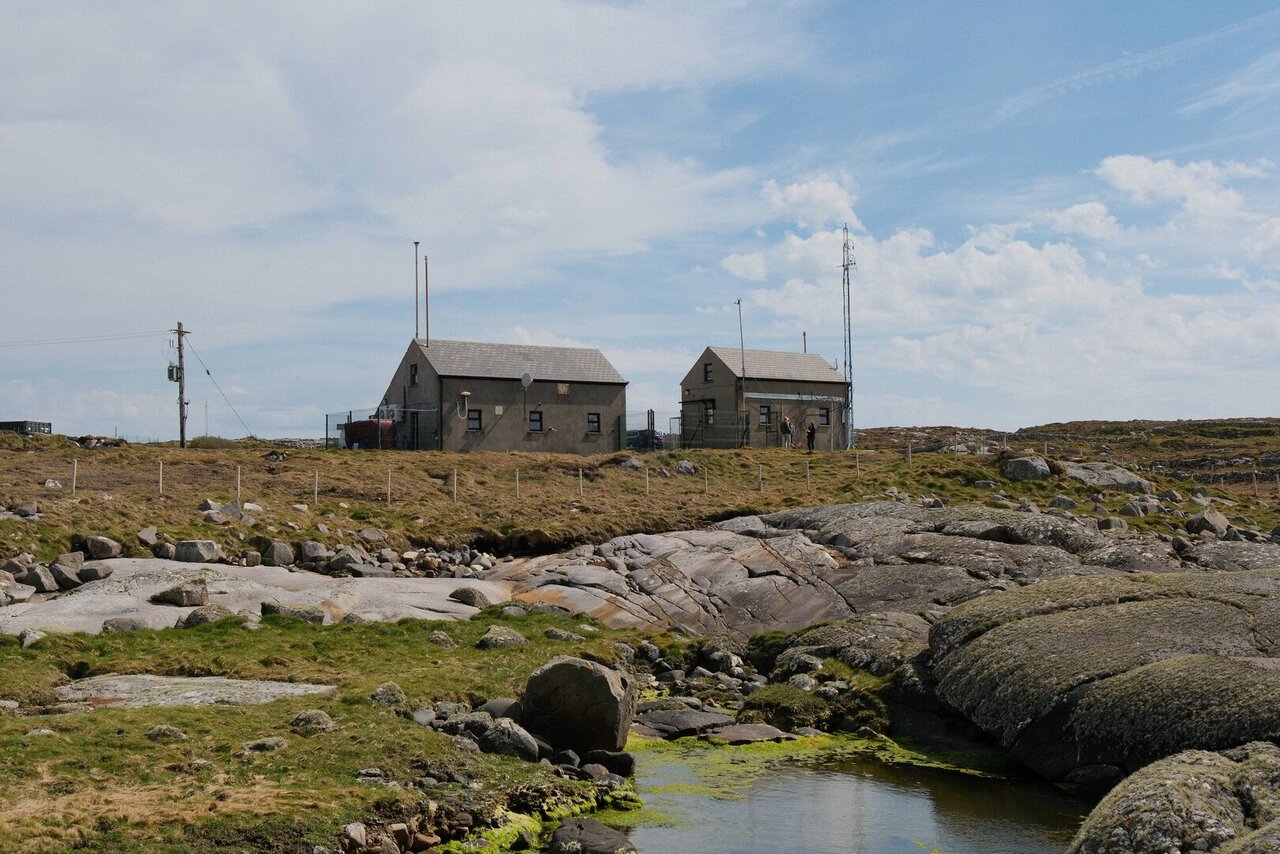
Mace Head is the University of Galway’s flagship atmospheric background monitoring station located on the west coast of Ireland which roughly receives half of the air masses from the Atlantic Ocean, with episodic continental intrusions, making it an ideal background monitoring site for atmospheric composition. High frequency Greenhouse gas measurements started in 2009 as part of the ICOS (integrated Carbon Observing System) preparatory phase. The site was officially labelled as ICOS Class 2 Atmosphere site in May 2026. Mace Head site has a unique history and role in European and global observations. Most recently, for the NUBICOS project (New Users for a Better ICOS), the station has been conducting flask sampling with partners from different parts of the world.
The installation of ANSTO radon detector as a part of EU-Horizon funded NuClim (Nuclear observations to improve Climate research and GHG emission estimates project helps augment that capacity. The aim is to develop a ubiquitous method to classify clean air based on radon observations while also utilising trace gas, aerosol, cloud and meteorological observations. The radon observations from NuClim would assist in defining baselines for greenhouse gas measurements being carried out under ICOS and NUBICOS projects. For instance, in context of NUBICOS, the sampling is taking place only under clean marine conditions defined by back trajectories, CO2 standard deviation and wind direction. Adding radon threshold to the defining parameters would enhance the confidence in the measurements.
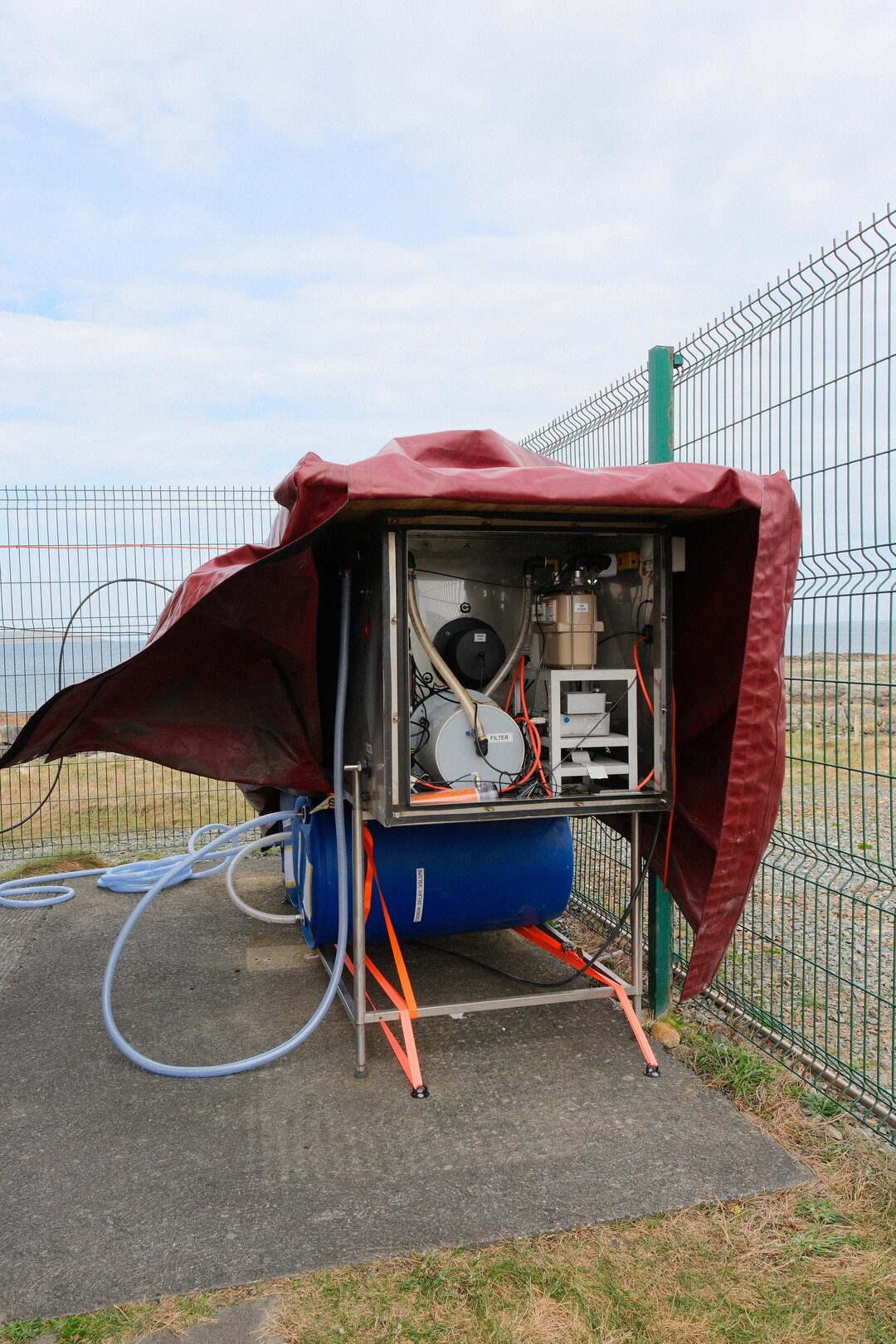
With radon data being embedded in the multi-parameter monitoring at Mace Head, the resulting dataset will be a crucial stepping stone towards machine learning model development and validation while defining clean air baseline for European greenhouse gas monitoring stations. This will ultimately provide scientific foundation for robust, credible and policy relevant greenhouse gas emission estimates at both regional and continental scales.
Text: Aimon Tanvir
Photos: Sandrena Steeds