
Nuclear observations to improve Climate research and GHG emission estimates (NuClim)
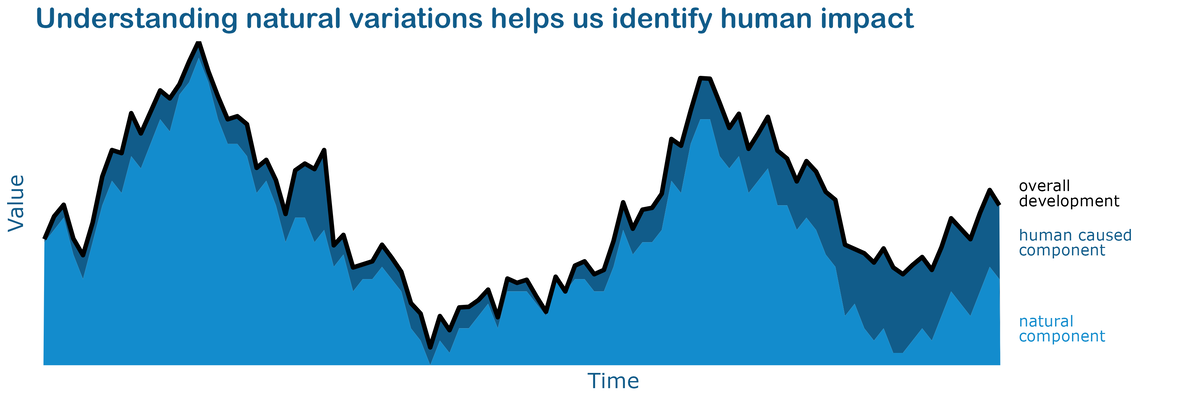
Greenhouse gas concentrations change due to two groups of causes: natural variations and deviations caused by humans. While understanding these two is important for modelling climate change, we currently don't know enough about either of them. This is why the NuClim project aims to measure the natural variations and fill this gap.
The climate change we are experiencing is caused by human activities that are increasing the amount of greenhouse gases in the atmosphere. However, the activities and emissions are neither spatially nor temporally uniform. To really understand the influence of humans, this is crucial information. At the same time greenhouse gases in the atmosphere also vary naturally. Understanding the human effects without understanding the natural variations is impossible. Therefore, determining the baseline for Europe and its natural variations on top of which the human effects work is the aim of this project.
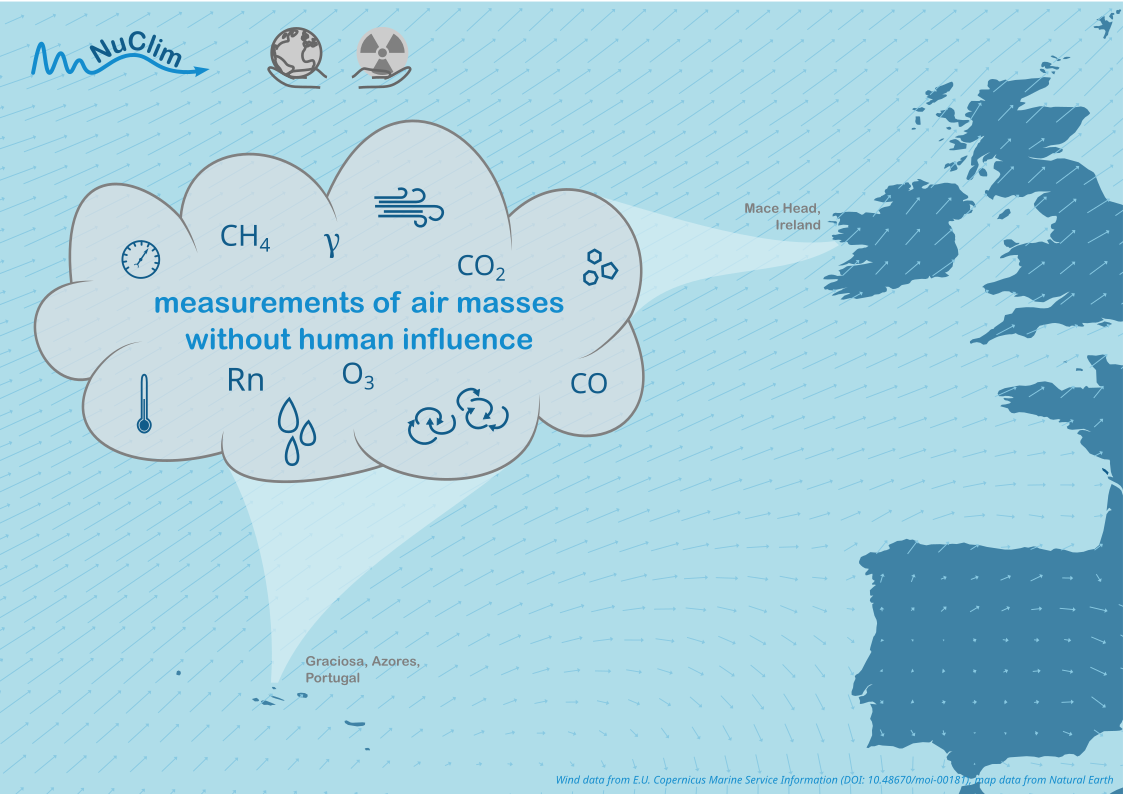
To measure air before it encounters human activities, measurements in NuClim are taken in two remote places: the Azores island Graciosa and Mace Head in western Ireland. Westerly winds from the Atlantic pass these before arriving at the European mainland. At these two stations greenhouse gases and radon are measured. Radon is a radioactive noble gas. It occurs naturally in the environment. As its main sources are on land and it decays within weeks (half-life of about 3.8 days), it tells us whether the air has been in contact with land recently. In this study, it serves as an indicator that the air mass has not encountered land in preceding days and with that has had as little human influence as we can hope for.
Measurements of the ambient gamma dose rate will also shed light on how it changes with different conditions. As it is an important parameter for nuclear surveillance networks and radiological protection, knowing the natural variations for this can be used similarly to the greenhouse gases: differentiating between natural and human-caused changes. In addition, meteorological measurements will indicate how variations correlate with atmospheric conditions, biological surveys will give insight into feedback with plankton and studies of the boundary layer between ocean and atmosphere will investigate how those affect greenhouse gases.